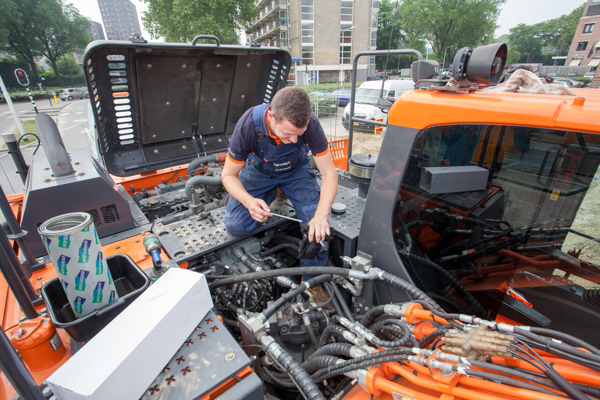
As our mission states, we ensure optimally performing machines. We want to make it as easy as possible for customers to use our machines. Charging our powerful power boxes is part of that. What role does Staad play in this? And what are the various options?
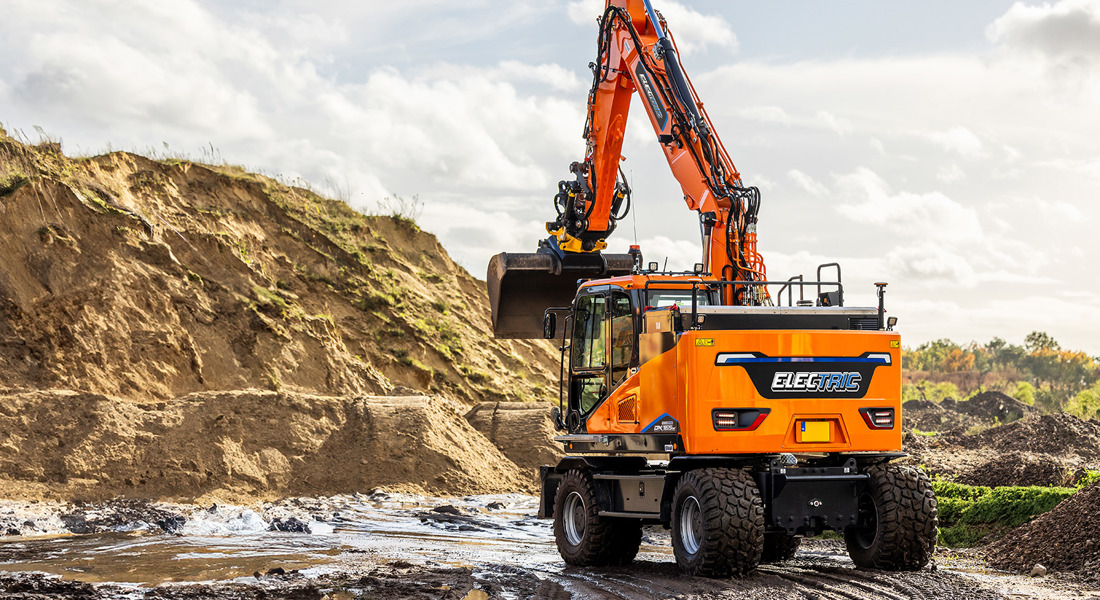
"After selling our first electric machine , we faced a challenge on the very first day. The machine wouldn't charge, causing the operator to stop. Upon arrival at the site, we discovered the electric machine was connected to a rather fragile charging station, meaning it simply couldn't be fully charged. This problem obviously shouldn't happen again in the future, as we can't visit every customer. That's why we, Staad, came up with the idea of offering our own charging solutions, which are included as standard with the purchase of the machine. In collaboration with a supplier, we were able to make this possible, and in this way, we strive to make things easier for our customers every step of the way," says Sijmen Staadegaard.
There are several ways to charge the machine. AC charging allows the machines to be charged directly, without removing the power boxes. It's also possible to charge the power boxes using fast DC charging. The main difference between AC and DC charging is that with DC charging, the power boxes can be removed from the machine and transported. This allows them to be charged at other locations. The different types of AC and DC chargers are described below:
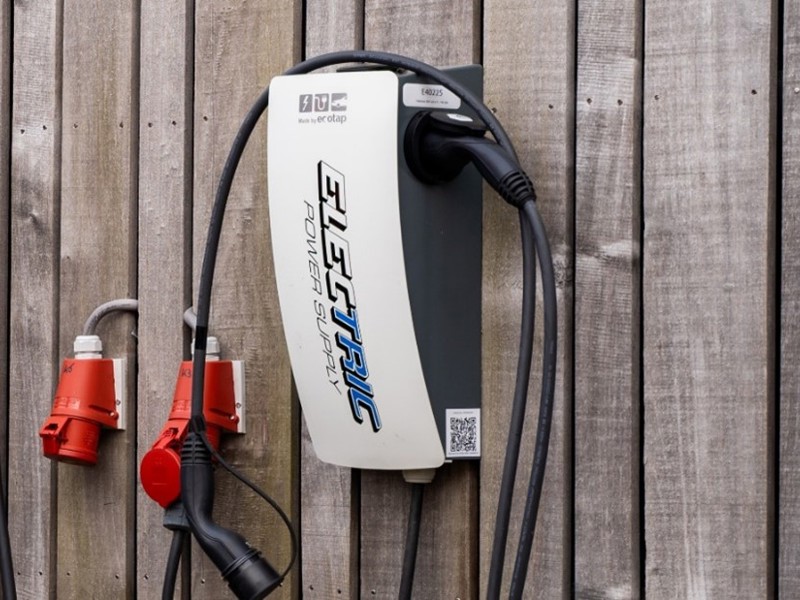
AC Single
This charger only charges the power unit battery packs when they are connected directly to the machine. It has a CCS2 7-pin connector, which is also used for charging electric cars. Charging the power unit is handled by the machine itself. The AC Single and AC Duo modes first fully charge one of the two power units, then switch to the second power unit. The charger requires 1x 32A and 380V AC to operate effectively. The amperage can be adjusted, allowing you to change the charging speed. At 32A, the minimum charging time for the Doosan DX165W Electric with one power unit 140 (140 kWh) is 5 hours to charge to 80% SoC (State of Charge). For a 100% fully charged power unit 140, the charging time is at least 6 hours.
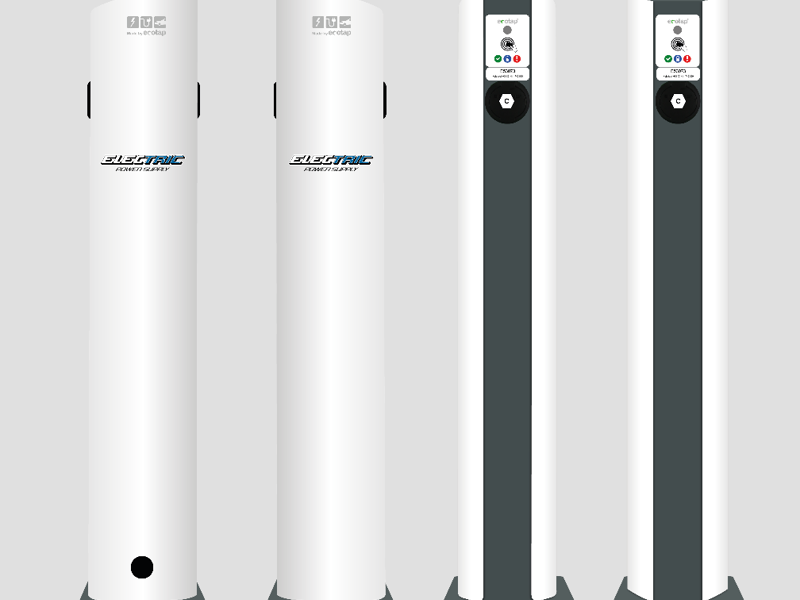
AC Duo
The AC Duo is also a charger that can only be connected directly to the machine and, like the AC Single, has a CCS2 7-pin plug. The AC Duo requires an input power of 1x 63A at 380V AC. Charging a single PowerBox 140 is therefore much faster, and the Doosan DX165W Electric takes at least 2.5 hours to charge to 80% SoC. Fully charging a single PowerBox 140 takes 3.5 hours.
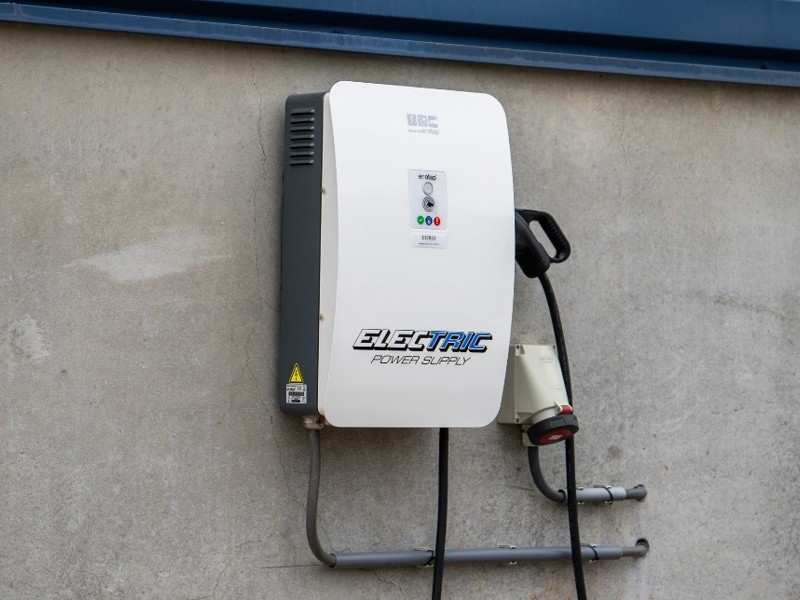
DC30
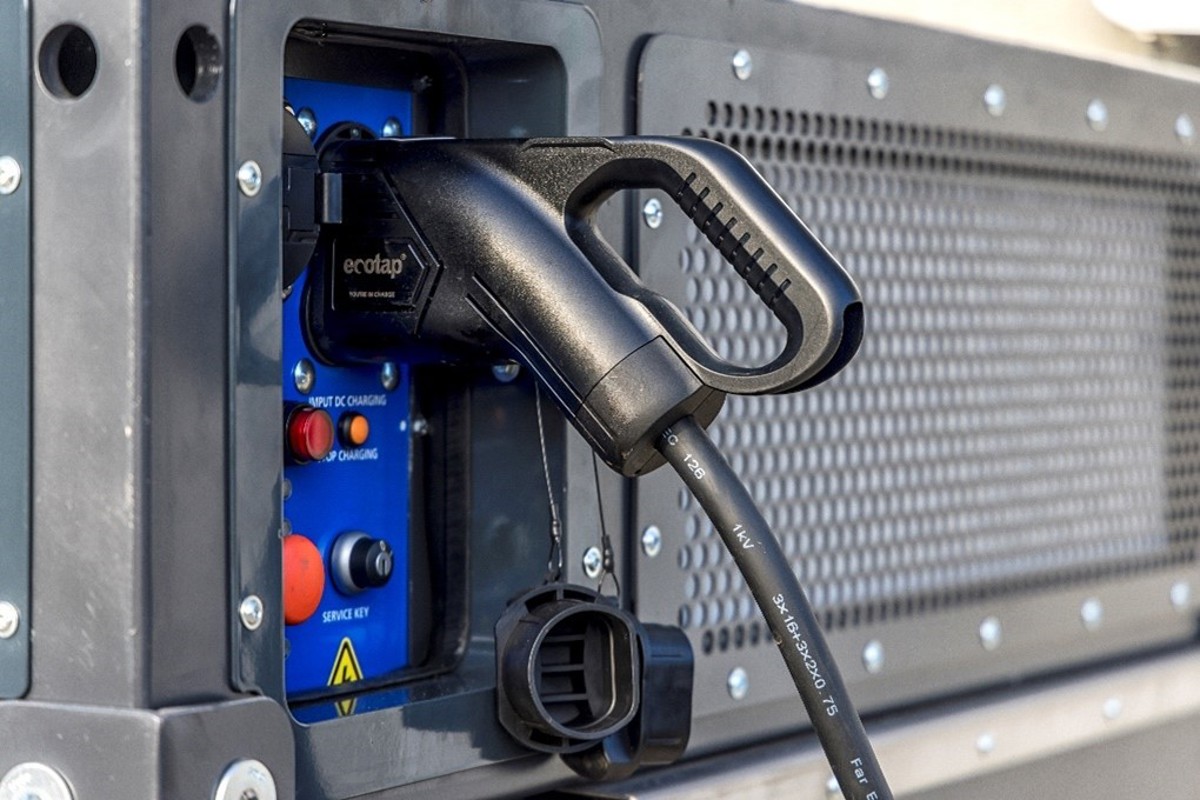
Powerboxes can be charged directly at the DC30 using a CSS type 2 plug. The charger requires 380V AC with 50A input power, so the charging time for the Doosan DX165W Electric up to 80% SoC is at least 4 hours. For a 140 Powerbox fully charged, the minimum charging time is 5 hours.
DC40
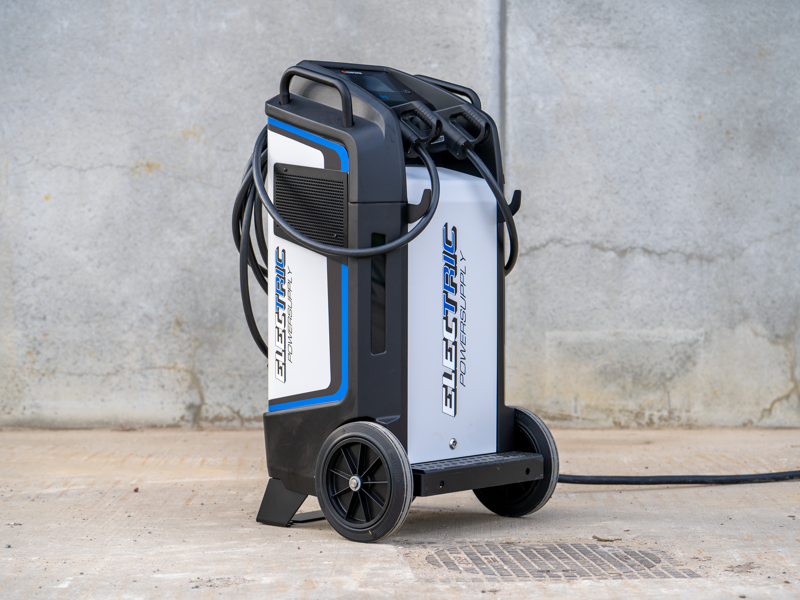
The portable DC40 also has a CSS type 2 connection and is easily portable. It requires 380V AC with a 32A or 63A input power to supply the battery boxes. Charging time for a single Power Box 140 for the Doosan DX165W Electric is 5 hours (32A) or 2.5 hours (63A) for 80% SoC. A full Power Box 140 requires 6 hours (32A) or 3.5 hours (63A).
DC60
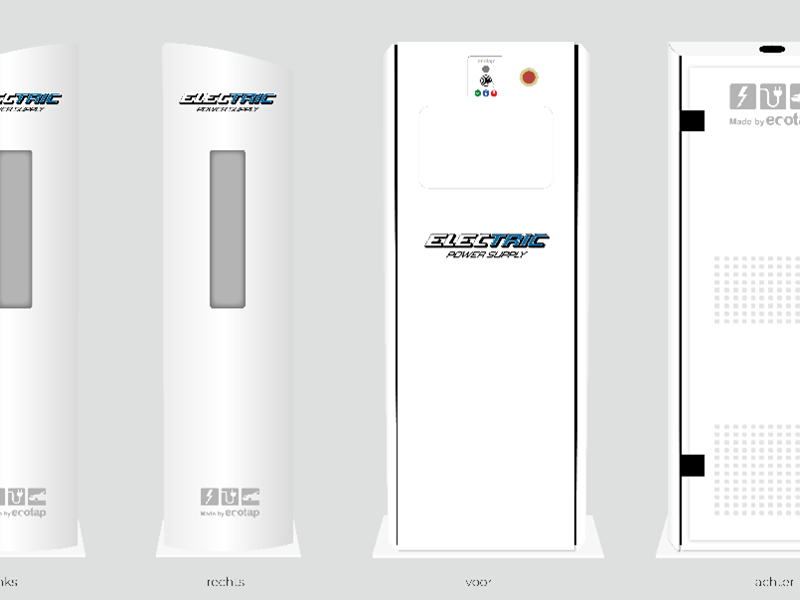
What's unique about the DC60 is its ability to select the number of power boxes it charges. Users can pre-select whether to charge one or two 140-watt chargers. This charger requires 380V AC with a 90A input power supply to operate. Therefore, it takes approximately two hours to charge one 140-watt charger from the Doosan DX165W Electric to 80% SoC, and 2.5 hours to charge a 140-watt charger to 100% capacity.
DC120
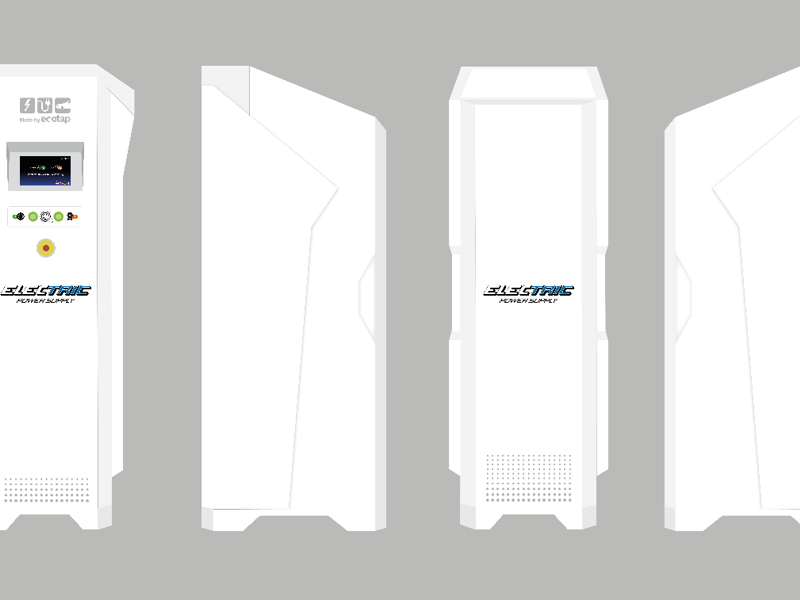
The DC120 allows two PowerBox 140s to be charged simultaneously. This charger can charge a PowerBox 140 to 80% SoC in one hour and requires a 380V AC connection with 180A input power. Fully charging a single PowerBox 140 for the Doosan DX165W Electric takes approximately 1.5 hours. This incredible speed makes the DC120 the fastest charger in the STAAD range.
Contact us. We are happy to tell you more about it!